
What Is Destiny? Learn How to Build a Truly Happy Future
“What is destiny?”, “How can I improve it?”, “Is it possible to succeed even when everything seems lost?”, “Does my life really have a purpose?”
These are questions we have all asked ourselves at some point in life. They are both human and spiritual questions we must ponder to better understand where we are and where we want to go, always aiming at building a happy destiny.
That’s why today we invite you to reflect on this topic and take active role in shaping your future.
In His Holy Gospel, Jesus tells us the story¹ of a father who had two sons. The younger one asked him to divide his property and give him the share that belonged to him. And so the father did. The young man then left for a distant land and wasted everything on reckless living. He suffered and even went hungry.
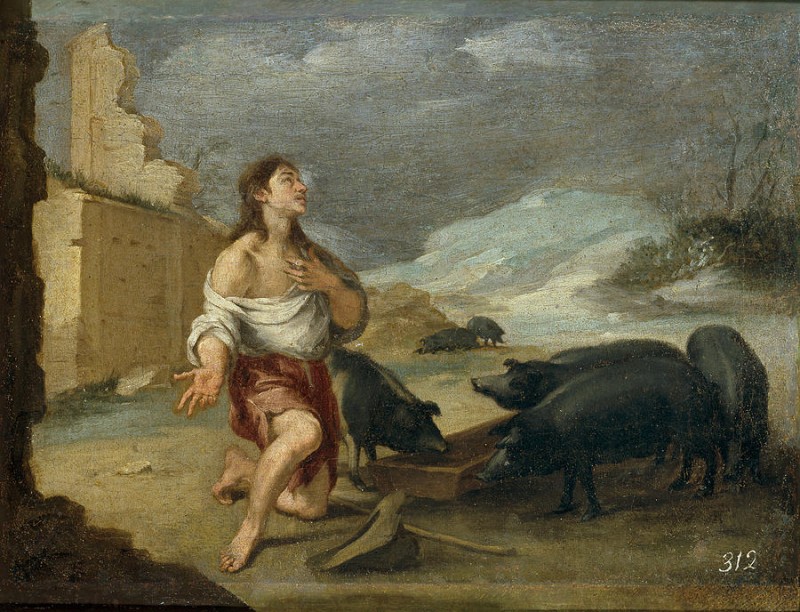
We’ll come back to this thought-provoking “Parable of the Prodigal Son” later on. But first, let’s look at some fundamental points:
In the Cambridge Dictionary, we find this definition: “Destiny is the particular state of a person or thing in the future, considered as resulting from earlier events. It is a synonym for fate, doom, fortune, future, karma, and lot.”
Although God created us, we are the ones who determine our destiny through the way we use the free will granted to us by Divine Law. This is a principle demonstrated in physics and expressed mathematically by Isaac Newton: “For every action, there is an equal and opposite reaction.”²
So, when we ask what destiny is, it’s essential to let go of the mistaken idea that someone or something else controls it. Or even that there is a mean god, taking pleasure in our suffering. Not at all! We emphasize: We create our own destiny through our actions.
José de Paiva Netto (1941-2025), Spiritual Leader of the Religion of God, of the Christ, and of the Holy Spirit, sheds light on this important subject in the book Sagradas Diretrizes Espirituais da Religião de Deus, do Cristo e do Espírito Santo [Sacred Spiritual Guidelines of the Religion of God, of the Christ, and of the Holy Spirit], volume 2, page 376:
“Whatever we do wrong must be fixed by ourselves. It does not mean that we are doomed to suffer eternally the consequences of an episodic deviation in the fulfillment of Heavenly Ordinances.”
And he concludes:
“By the sovereign will of God the Creator, there exists the irrevocable Universal Law of Cause and Effect. As a mentor of the Divine Realms once warned:
‘Sowing is a matter of free will, but reaping is mandatory.
We are, therefore, constantly sowing (free will) and reaping (determinism).’”
So, understanding what destiny is evokes a sense of responsibility, a commitment to doing Good, and a righteous attitude toward life—starting with our very thoughts. The late Proclaimer of the Divine Religion, Alziro Zarur (1914-1979), used to say:
“Thoughts create human destinies.” And also: “God created human beings in such a way that they can only be happy by doing Good.”
But you might ask, “What about the mistakes I’ve already made? Isn’t my future determined by them?!”
God grants us the extraordinary opportunity to correct ourselves every day. So, it is in your hands the power to become the architect of a happy future by acting with Good Will.
This means that if, for whatever reason—be it misfortune or carelessness—we have acted in ways that were less than dignified in the past, even in previous reincarnations, toward ourselves or our fellow beings, we are not condemning our destiny to eternal unhappiness.
We learn in the Religion of the Third Millennium that reincarnation is not a punishment, but an opportunity.
When bad things happen, it’s very common to hear people say “it’s fate,” “I was born to suffer,” or “It must be God’s will” . . . and we forget that God did not create us for suffering, for He is Love, as Jesus has taught (First Epistle of John 4:8). In no way are these reflections meant to diminish anyone’s struggles. On the contrary.
To help us overcome challenges with Divine Protection, Prophet Jeremiah shares these words of strength and encouragement that the God of Love inspired in him and caused to flow from his lips:
“‘For I know the plans I have for you,’ declares the LORD, ‘plans of Peace, and not of evil, to give you an expected end.’” (Jeremiah 29:11)
Whatever mistakes we may have made at some point—in this or in other lives, since we are Eternal Spirits in evolution—cannot define or label us, for we have the precious chance to progress by acting rightly and no longer repeating the wrongs of the past. As Brother Paiva proclaims—and it is inscribed on the Throne and Altar of God at the Temple of Good Will: “Every day is the day to renew our destiny.”
Whenever you think about what destiny is and the difficult situations you’ve been through, do not blame others or God; do not blaspheme against life, but take the reins of your own existence. As we learn in the Religion of the Third Millennium:
“Good luck and bad luck are illusions. We are the ones who create our own destiny. Therefore, we should nourish good thoughts—that is the first step to make them come true.”
Do you remember the “Parable of the Prodigal Son” told by Jesus (the Gospel according to Luke 15:11-32), which we mentioned in the beginning of our conversation? It offers us an insight into what luck truly is, since a happy destiny also has to do with repentance and renewal: The younger son of that loving father regretted the decisions he had made and turned what would have been a tragic, unhappy fate into an opportunity to start over.

The late Brother Alziro Zarur used to teach: “An individual shapes their destiny, first through thought, then through word, and finally through action.” The young man in the passage followed this path of transformation, even if unconsciously: He reflected on the need for change (verse 18), then, he verbalized and acted upon that change by returning to his father (verses 20 and 21).
We can compare the father’s attitude to the boundless Love that Jesus, our Zealous and Compassionate Master, has for us when we acknowledge our mistakes and retrace the path that leads to His sublime encounter; for He welcomes us with open arms and guides us toward a glorious destiny.
But we will also often have to deal with situations similar to the one faced by the young man with his older brother, because when we make mistakes, it is not only we who suffer; others involved also suffer and are saddened by our thoughtless behavior.
Renewal also calls for an attitude of resilience, perseverance, and redemption.
It’s worth reading this emblematic passage and reflecting on it:
Parable of the Prodigal Son
The Gospel of Jesus according to Luke 15:11-32
11Jesus continued: “There was a man who had two sons.
12 The younger one said to his father, ‘Father, give me my share of the estate.’ So he divided his property between them.
13 “Not long after that, the younger son got together all he had, set off for a distant country and there squandered his wealth in wild living.
14 After he had spent everything, there was a severe famine in that whole country, and he began to be in need.
15So he went and hired himself out to a citizen of that country, who sent him to his fields to feed pigs.
16 He longed to fill his stomach with the pods that the pigs were eating, but no one gave him anything.
17 “When he came to his senses, he said, ‘How many of my father’s hired servants have food to spare, and here I am starving to death!
18 I will set out and go back to my father and say to him: Father, I have sinned against heaven and against you.
19 I am no longer worthy to be called your son; make me like one of your hired servants.’
20 So he got up and went to his father. “But while he was still a long way off, his father saw him and was filled with compassion for him; he ran to his son, threw his arms around him and kissed him.
21 “The son said to him, ‘Father, I have sinned against heaven and against you. I am no longer worthy to be called your son.’
22 “But the father said to his servants, ‘Quick! Bring the best robe and put it on him. Put a ring on his finger and sandals on his feet.
23 Bring the fattened calf and kill it. Let’s have a feast and celebrate.
24 For this son of mine was dead and is alive again; he was lost and is found.’ So they began to celebrate.
25 “Meanwhile, the older son was in the field. When he came near the house, he heard music and dancing.
26 So he called one of the servants and asked him what was going on.
27 ‘Your brother has come,’ he replied, ‘and your father has killed the fattened calf because he has him back safe and sound.’
28 “The older brother became angry and refused to go in. So his father went out and pleaded with him.
29 But he answered his father, ‘Look! All these years I’ve been serving you and never disobeyed your orders. Yet you never gave me even a young goat so I could celebrate with my friends.
30 But when this son of yours who has squandered your property with prostitutes comes home, you kill the fattened calf for him!’
31 “‘My son,’ the father said, ‘you are always with me, and everything I have is yours.
32 But we had to celebrate and be glad, because this brother of yours was dead and is alive again; he was lost and is found.’”
We conclude this article by reiterating our invitation for you to take charge of your own destiny and become a winner with Jesus. It is not other people's comments, the circumstances around you, or the external facts of daily life that decree your destiny. Instead, it is your attitude of Accomplishing Faith (Faith + Good Deeds) and your thoughts firmly rooted in Jesus Christ in the face of all these situations.
To your heart, here are these words of strength and perseverance from the Spiritual Leader of the Religion of Universal Love, Paiva Netto, in his article “Become the Protagonist of Your Own Destiny”:
“Instead of cursing your life or your misfortune, my Brother, my Sister, use your time for your own benefit as a leverage for your destiny by helping those who suffer even more. This will draw countless blessings to your Spirit, and solutions will emerge along the way. An ancient aphorism, which should be highly regarded, says: ‘Thought is the tailor of destiny.’”
Let’s build a happy future! Shall we?
____________________________________________________________
¹ The Gospel of Jesus according to Luke 15:11-32
² Principle of action and reaction ― Newton’s third law of motion.